We and selected third parties use cookies or similar technologies for technical purposes and, with your consent, for
functionality, experience and measurement as specified in the
cookie policy.
You can freely give, deny, or withdraw your consent at any time.
In this panel you can express preferences related to the processing of your personal information.
You may review and change your choices at any time. To deny consent for a specific purpose,
switch the toggle off or use "Reject all."
Consent preferences for tracking technologies
Denying consent for a particular purpose may make related features unavailable. See our
cookie policy for full details.
Strictly NecessaryAlways active
Required to operate the service. These trackers cannot be disabled.
Functionality
Enable basic interactions and functionalities such as language preferences and access to selected features of our service.
Experience
Help us improve the quality of your experience and enable interactions with external content, networks and platforms.
Measurement & Analytics
Help us measure traffic and analyse your behaviour to improve our service and optimise your experience.
Introduction Directive (EU) 2022/2381 of the European Parliament and of the Council (hereinafter: the “Directive“) aims to improve gender balance on the boards of publicly listed companies. The Directive is the result of more than a decade of EU legislative efforts responding to structural gender imbalances in corporate governance structures. The Directive seeks to promote…
In the absence of the required contractor’s declaration for occupancy permits for new constructions in accordance with Article 14 of Government Decree No. 191/2009 (IX. 15.) (hereinafter: “Building Code“) [beyond the cases regulated in the provisions of Article 39 (d) of the Government Decree 312/2012 (XI.8.) (hereinafter referred to as the “Permitting Decree“)], the conditions…
On 13 July 2023 the Court of Justice of the EU published the judgment in the case C-106/22 ruling that the objective of ensuring the supply of gravel, sand, and clay to the construction sector at the regional level cannot justify a restriction on the freedom of establishment. In this case, the Hungarian company Xella Magyarország (concrete…
The regulation The European Union introduced the 2019/1937 Directive on the protection of whistleblowers, aiming to establish a secure reporting channel for both private and public sectors. While the directive was required to be transposed into national law by December 17, 2021, Hungary and several other member states missed the deadline. However, the Hungarian Parliament…
What is it? Sustainability or sustainable development, which have become buzzwords in the recent years, require an integrated approach from companies, taking into account environmental aspects alongside economic development. In 1987, the UN Brundtland Commission defined sustainability as, “meeting the needs of the present without compromising the ability of future generations to meet their own…
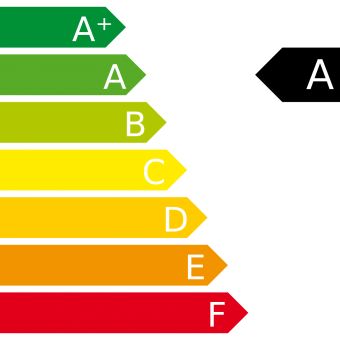
It has been known within the construction industry since 2014 that from 2021 on obtaining a building permit and occupancy permit will be only possible for ‘nearly zero-energy buildings’ (NZEBs). Nearly zero-energy buildings and energy efficient buildings are becoming more and more popular as the climate and energy crisis increasingly drives the need for them….
The Government Decree 312/2012 (XI.8.) (“Decree“) regulates – inter alia- the basic rules of the building permit procedures including the material conditions under which a building permit can be issued by the authority. With effect from 17 August 2022 Government Decree 315/2022 (VIII. 16.) amended the Decree concerning the cases in which the building authority…
In recent years the EU has adopted several directives that both aim to increase transparency in companies and help “clean up” the countries’ economies. Hungary was one of the last European countries to adopt a law establishing a register of ultimate beneficial owners (UBO register). Ultimate Beneficial Owners (UBO) are individuals who benefit from a…
The Court of Justice of the European Union has delivered a significant judgment in a case to examine whether the Privacy Shield Convention (2016/1250), which governs the transatlantic use of EU citizens’ personal data, achieves its intended purpose. As a result of that decision, the EU-U.S. Privacy Shield is no longer a valid mechanism to…
As part of the “economic protection plan” introduced by the Hungarian Government as an answer to the COVID-19 epidemic the Government Decree Nr. 227/2020. (V. 25.) (hereinafter: “Decree“) established temporary measures for special transactions related to strategic companies incorporated in Hungary. On the 16th June 2020 the Government ended the state of emergency, however, the…
With regard to the COVID19 epidemic the Hungarian Government has progressively implemented certain restrictive measures that may have an impact on the use of commercial stores. Let us provide you a brief summary below on the implemented measures and the affects thereof on non-residential lease agreements. The scope of the retail tax does not only…
With regard to the COVID19 epidemic the Hungarian Government has progressively implemented certain restrictive measures that may have an impact on the use of commercial stores. Let us provide you a brief summary below on the implemented measures and the affects thereof on non-residential lease agreements. The measures of the Government On March 17, 2020,…
From 1st of March 2020 significant changes will occur in the field of construction law concerning the structure of the competent building authorities. Within the framework of the changes, from the above date the previously first instance building authority, namely the notaries of the municipal government (district centre), the notaries of the municipal government of…
1. Recitals – Plaza-stop I. The so-called plaza-stop I. rules were effective as a part of Act LXXVIII of 1997 on the Formation and Protection of the Built Environment (hereinafter: “Act”) from January 1, 2012 until January 1, 2015, according to which rules the construction of any commercial buildings above gross area of 300 sqm…
The compliance deadline (January 8, 2017) defined in the amendment (Act 79 of 2016 on the harmonization of the employment legislation) of the Act 93 of 1993 on Labor Safety (Mvt.) which brought significant changes regarding the workers’ representatives, will expire soon. Since Juli 8, 2016 a workers’ representative for occupational safety shall be elected…
In all areas of business, numerous provisions of EU law confer direct and indirect rights and obligations on businesses and enterprises of the Member States. The law of the European Union has become an integral and equal part of the national legal systems of the Member States. The authorities in each Member State – among…
As of March 1, 2012 regulations of corporate law have been changed again by the legislator. We would like to briefly summarize the most remarkable corporate law changes for the companies’ decision makers: the attorney’s seat service supply for companies will not be possible anymore (further seat service cannot be provided, although the already provided…
From 1 January 2012, an energy performance certificate has to be obtained by the developer, the owner or the landlord when buildings are sold or let. The certificate will remain valid for 10 years (although in certain cases new certificates will be required.) and it must be prepared by a duly authorised engineer or professional…
Pursuant to Act No. 50 of 2009 on the payment order procedure (fizetési meghagyásos eljárás), from the 1st of June 2010, it is a notarial power to enforce due pecuniary claims in payment order procedures. The goal with the new regulation was primarily to relieve the ordinary courts, since more than 400 thousand of these non-litigious procedures were conducted in front of the courts in every year….