
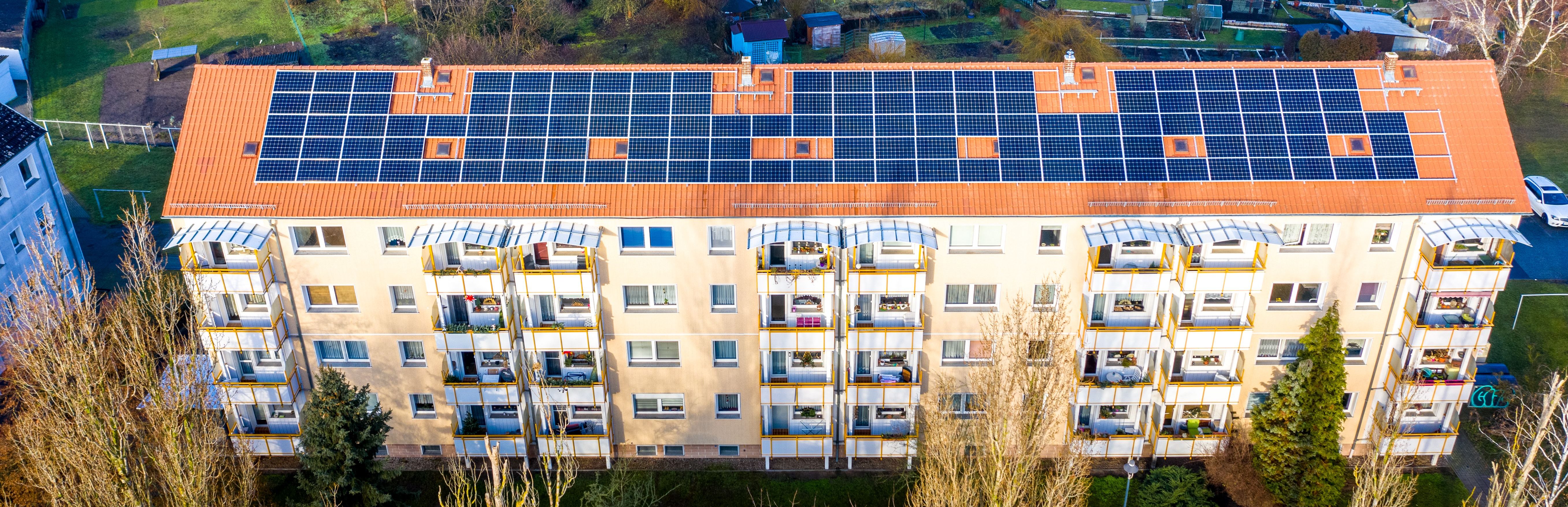
The European Union’s 2050 climate neutrality goal is driving significant legislative changes across numerous sectors, with the real estate market at the forefront. The recently adopted Directive (EU) 2024/1275, better known as the Energy Performance of Buildings Directive (EPBD), represents a fundamental revision of construction regulations. This directive will redefine the legal and economic frameworks of the real estate market across Member States, including Germany and Hungary, necessitating early adaptation to mitigate risks and exploit new value-creation opportunities.
1. Key Findings of the Revised EPBD
The revised EPBD, which entered into force on May 28, 2024, requires Member States to transpose it into national law by May 29, 2026. Its primary objective is to achieve a zero-emission building stock by 2050. This is not a gradual adjustment but a transformative regulation with profound implications for property values, financing, and transaction structuring.
2. What Changes are Expected? Practical Content
The directive introduces several critical changes affecting both new constructions and the existing building stock:
2.1. New performance requirements for buildings
The EPBD introduces Minimum Energy Performance Standards (MEPS), specifically targeting inefficient buildings. This entails a gradual tightening of energy thresholds for both commercial and residential properties. Owners of low-performance buildings may face mandatory renovation requirements or asset devaluation, which could lead to these assets becoming “stranded assets.”
2.2. Zero-Emission Buildings (ZEB)
All new buildings must be zero-emission from 2030, while public buildings must meet these standards as early as 2028. This means that no CO₂ emissions from fossil fuels may be generated during operation. In practice, this results in heat pumps, photovoltaic systems, solar collectors, and other renewable energy sources becoming the standard. Requirements for insulation, building envelopes, and smart control systems will also increase, ensuring that buildings use energy efficiently and can adapt to grid demands.
2.3. Renovation Wave and National Planning
Every Member State must adopt a National Building Renovation Plan that defines specific targets for the existing building stock:
a) Non-residential buildings: The worst-performing 16% must be renovated by 2030, and the worst-performing 26% by 2033.
b) Residential buildings: Member States must ensure a reduction in average primary energy use of at least 16% by 2030 and 20-22% by 2035.
This shifts regulatory and financial pressure from new constructions to the existing building stock, prioritizing the least efficient properties.
2.4. Energy Certification and Transparency
The directive strengthens Energy Performance Certificates (EPCs), introducing more uniform and lifecycle-based metrics. Energy data will become essential transactional information, similar to ownership rights or zoning. Energy certificates will gain even greater significance, allowing buyers and tenants to better assess a property’s energy efficiency. Information will be standardized across Europe, ensuring greater transparency regarding actual energy consumption.
2.5. Phasing Out Fossil-Based Systems
State subsidies for stand-alone fossil fuel boilers will cease from 2025. While the directive does not immediately ban existing oil or gas heating systems, it clearly promotes renewable energies. Climate-friendly heating systems such as heat pumps, district heating, or hybrid solutions are expected to gradually dominate the building sector. This means that when replacing heating systems, owners must consider long-term requirements and available subsidy options.
2.6. Solar Energy Mandate
The EPBD mandates the gradual installation of solar energy systems on suitable buildings. The key deadlines are as follows:
a) 2027: For new public buildings and new non-residential buildings larger than 250 square meters.
b) 2028: For larger existing buildings undergoing comprehensive renovation or roof refurbishment.
c) 2029: For new residential buildings.
Additionally, new buildings must cover 100% of on-site energy consumption from renewable sources from 2030 (from 2027 for public buildings), where technically feasible. Member States must also design policies aimed at eliminating the use of fossil fuels in buildings by 2040. Energy Performance Certificates (EPCs) will be improved to clearly show the share of renewable energy and CO₂ reduction, thereby increasing transparency.
2.7. More Charging Points for Electric Vehicles
To accelerate the expansion of charging infrastructure, new buildings and major renovations will increasingly be required to provide charging points or ducting for electric vehicles. This applies particularly to larger residential complexes, office buildings, and commercial properties, preparing them for the growing number of electric cars.
2.8. Lifecycle Emissions
The revised EPBD also addresses greenhouse gas emissions throughout the entire lifecycle of buildings, moving beyond operational energy use. This includes emissions from the manufacturing, transport, installation, maintenance, and demolition of building materials—so-called “embodied” carbon emissions—alongside “operational” carbon emissions from the building’s use phase. Mandatory calculations will be introduced for new buildings, and this information will be made public. Lifecycle requirements will be phased in, starting in 2027 for buildings larger than 2,000 square meters, and extending to all buildings after 2030. The directive emphasizes resource efficiency and the circular use of materials to reduce both operational and embodied carbon emissions.
3. Implementation in Hungary
Hungary has begun the transposition process, but the final legislative package is still pending. Implementation is expected to take place through stricter building codes, an expanded energy certification system, renovation incentives and/or obligations, and restrictions on fossil-based building systems. The exact scope, exemptions, and enforcement mechanisms remain uncertain, depending on national legislative decisions still under development.
4. Financing Mechanisms
To support ambitious renovation targets, the EU is mobilizing significant financial resources. Up to EUR 150 billion from the EU budget is available for EPBD implementation until 2030 through instruments such as the European Regional Development Fund (ERDF), the Cohesion Fund, and the “Renovate” initiative of the Recovery and Resilience Facility (RRF). Additionally, the proposed Social Climate Fund will mobilize EUR 72.2 billion between 2025 and 2032 to support vulnerable households, particularly those living in the worst-performing buildings. National building renovation plans must also ensure adequate national financing and encourage private investment.
5. European Examples of MEPS Implementation
Several European countries have already introduced or are in the process of introducing MEPS, providing valuable insights:
a) France: Introduced MEPS in 2019, requiring residential properties with energy classes G and F to be renovated to at least class B by 2030, and those in classes E and D by 2040.
b) Netherlands: Has had energy efficiency requirements since 1995, with a strong emphasis on phasing out natural gas. Currently, offices must achieve a class C or better rating by January 1, 2023. This early announcement (in 2018) allowed banks to prepare and offer specific financing products to facilitate renovations.
These examples demonstrate different approaches to achieving energy efficiency goals and highlight the importance of early planning and financial support.
6. Transactional and Commercial Impact
The revised EPBD entails significant transactional and commercial consequences:
a) Real Estate Transactions: Enhanced technical due diligence will be necessary, focusing on energy risks and capital expenditures. EPCs and energy data will become price-driving factors.
b) Development and Construction: The mandatory shift to zero-emission design involves higher initial costs but improves long-term asset value.
c) Financing: Alignment with the EU Taxonomy and ESG/CSRD frameworks will be crucial, with the risk of restricted financing for non-compliant assets.
d) Lease Agreements: The importance of “green lease” provisions and cost-sharing for energy efficiency improvements will grow.
7. Practical Recommendations
a) Energy efficiency analysis should be integrated into every transaction.
b) The portfolio’s exposure to MEPS thresholds must be assessed.
c) Construction projects should already be aligned with ZEB requirements rather than waiting until 2030.
d) Legislative developments in Hungary must be closely monitored, as 2025–2026 will be a critical period for implementation details.
Photo by Solarimo GmbH: https://www.pexels.com/photo/drone-shot-of-a-building-with-solar-panels-on-roof-4230062/
